



The Riviera Maya stretches 80 miles of Caribbean coastline south of Cancun, from Puerto Morelos to Tulum — and within that corridor exists more photographic variety than most regions ten times its size. This is where the Yucatan Peninsula's ancient Mayan civilization meets the modern luxury resort industry, creating a cultural and visual layering that is genuinely unique on Earth.
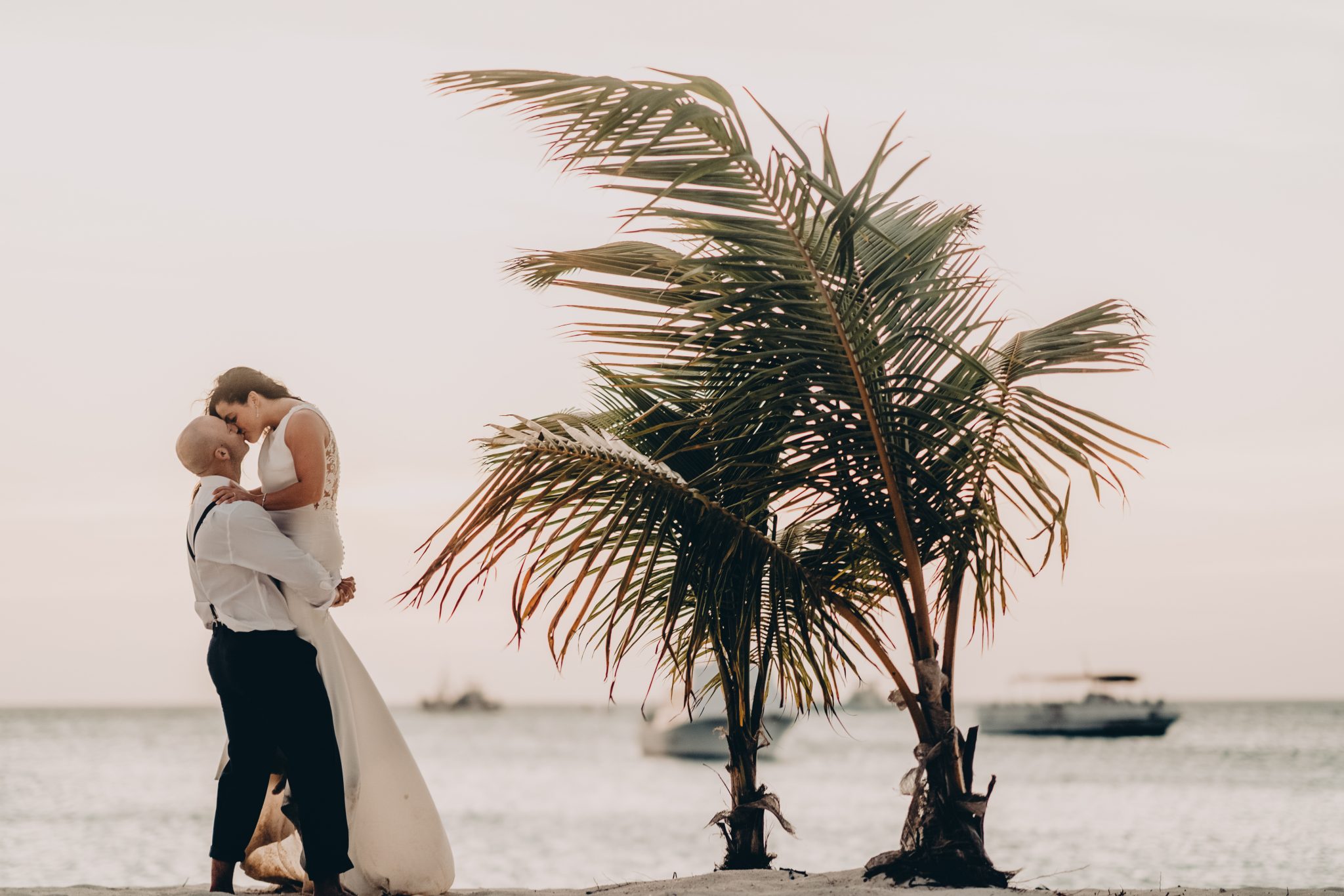
At the northern end, boutique hotel clusters in Akumal and Xpu-Ha offer intimate small-group weddings on quiet beaches far from tourist crowds. In the middle stretch, the village of Cobá sits next to Cobá Ruins — an active archaeological site where couples can photograph at the base of 138-foot Nohoch Mul pyramid with forest stretching to the horizon in every direction. And at the southern anchor, Tulum has become the world's leading eco-luxury wedding destination: clifftop Maya ruins overlooking the Caribbean, boutique hotels built into the jungle, and a minimalist aesthetic that photographs with extraordinary restraint and power.
The Riviera Maya is also the cenote capital of the world. The Yucatan Peninsula sits atop the world's largest underground river system, and its cenotes — natural freshwater sinkholes connected by cave passages — create photography opportunities that exist nowhere else on Earth. Couples willing to include even a single hour at a cenote return from the Riviera Maya with images they describe as the most extraordinary of their lives.
For photographers, the Riviera Maya means working within genuinely wild nature: Caribbean jungle, endemic wildlife, freshwater cenotes, and a coastline where the sand is still coral-white and the development is still sparse enough to find isolation if you know where to look.